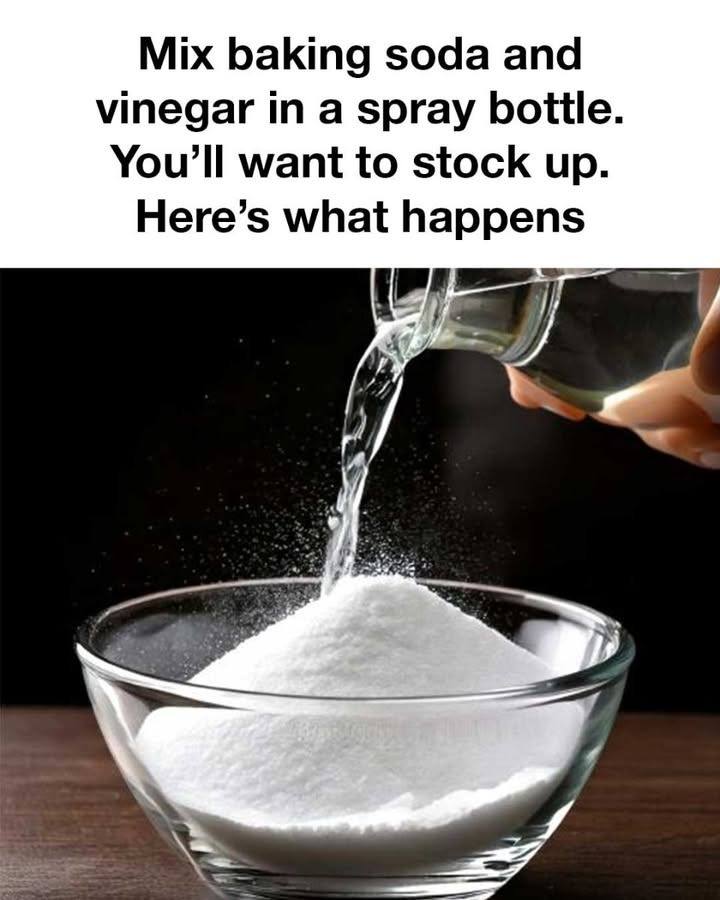
Mixing Baking soda (sodium bicarbonate) and Vinegar in a spray bottle creates a chemical reaction that produces carbon dioxide gas (CO₂) and water. 🧪 While it’s often suggested for cleaning, it requires care because the reaction can fizz and build pressure.
What Happens Chemically
- Reaction:
NaHCO₃ + CH₃COOH → CO₂ + H₂O + CH₃COONa - Effect: Fizzing and bubbling as carbon dioxide gas forms
- This reaction is temporary; once all CO₂ is released, you’re left with water and sodium acetate.
Important Safety Notes
- Do not tightly cap the spray bottle – gas buildup can cause the bottle to burst.
- Use a spray bottle with a vented nozzle to release pressure.
- Always test a small amount before spraying surfaces.
Common Uses
- Cleaning: Mildly abrasive for sinks, countertops, or stovetops
- Deodorizing: Neutralizes odors in garbage cans or refrigerators
- Unclogging drains: Pour baking soda, then vinegar; let fizz, then rinse with hot water
How to Make a Safe Cleaning Spray
- Mix 1 tablespoon baking soda with 1 cup water in the spray bottle.
- Add 1–2 tablespoons vinegar immediately before use.
- Spray on the surface, let it fizz, then wipe clean.
💡 Tip: For ongoing cleaning, keep baking soda and vinegar separate until right before use to avoid pressure buildup.
I can also give a step-by-step guide for a safe DIY fizz-cleaning spray that won’t damage your spray bottle. Do you want me to do that?
