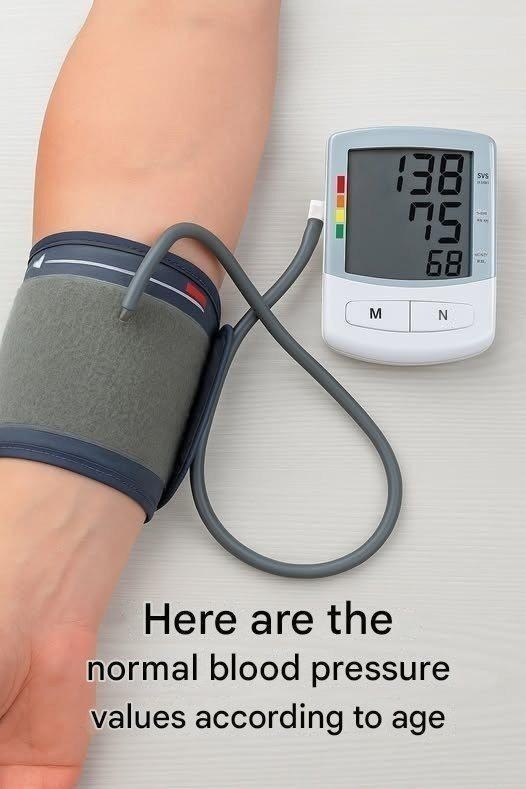
Blood pressure changes slightly with age, health, and lifestyle, but doctors use general ranges to define what’s considered normal. Blood pressure is measured in mmHg and written as systolic/diastolic (top number = pressure when the heart beats, bottom number = pressure when the heart rests).
General Blood Pressure Categories
Doctors commonly classify blood pressure using guidelines related to American Heart Association and the condition Hypertension.
| Category | Blood Pressure (mmHg) |
|---|---|
| Normal | Less than 120 / 80 |
| Elevated | 120–129 / less than 80 |
| High BP (Stage 1) | 130–139 / 80–89 |
| High BP (Stage 2) | 140 / 90 or higher |
| Hypertensive Crisis | 180 / 120 or higher (medical emergency) |
Normal Blood Pressure by Age
These are typical averages, not strict rules.
| Age Group | Average Normal BP |
|---|---|
| Children (6–12 years) | about 95–110 / 60–75 |
| Teenagers (13–19 years) | about 105–120 / 65–80 |
| Young adults (20–39 years) | about 110–120 / 70–80 |
| Adults (40–59 years) | about 115–130 / 70–85 |
| Older adults (60+ years) | about 120–140 / 70–90 |
Important Notes
- 120/80 mmHg is widely considered the ideal adult blood pressure.
- Slight increases with age are common because arteries become less flexible.
- Consistently high readings may indicate Hypertension, which raises risk of heart disease and stroke.
✅ Healthy habits to maintain normal BP:
- Reduce salt intake
- Exercise regularly
- Maintain healthy weight
- Avoid smoking
- Eat fruits and vegetables (like beetroot)
- Manage stress
✔️ If you want, I can also show you a simple chart of dangerous blood pressure levels and when to see a doctor.
