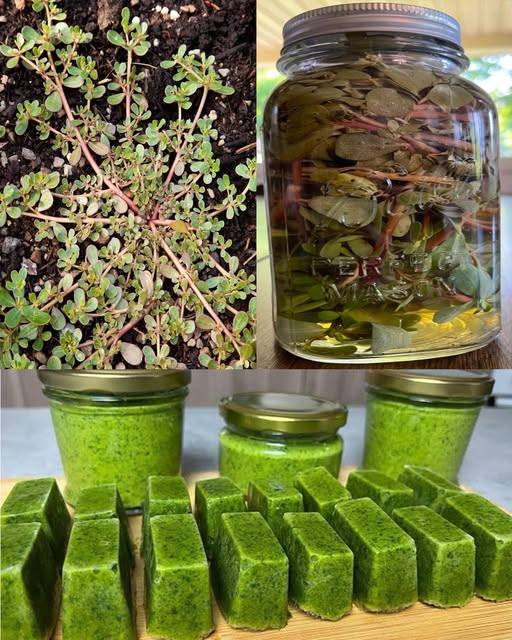
Portulaca oleracea — commonly called Common Purslane, is a small leafy plant that grows wild in many parts of the world, including South Asia. It is often considered a weed, but it is actually very nutritious and edible.
🌿 Basic Information
- Scientific name: Portulaca oleracea
- Common names: Purslane, Little hogweed, Verdolaga
- Local names (South Asia):
- Urdu: Kulfa / Kulfa saag (کلفہ)
- Hindi/Punjabi: Kulfa
🌱 Appearance
- Low-growing succulent plant
- Thick reddish stems
- Small, fleshy green leaves
- Tiny yellow flowers
- Spreads along the ground in gardens, fields, and roadsides
🥗 Nutritional Benefits
Common purslane is considered a superfood because it contains:
- Omega-3 fatty acids (rare in plants)
- Vitamin A
- Vitamin C
- Magnesium
- Potassium
- Iron
- Antioxidants
It may help with:
- Heart health
- Reducing inflammation
- Improving skin health
- Supporting the immune system
🍲 Culinary Uses
In Pakistan and nearby regions it is often cooked as Kulfa saag:
- Cooked with onions, tomatoes, and spices
- Mixed with daal (lentils)
- Added to salads
- Used in soups and stews
It has a slightly sour and salty taste.
⚠️ Important Note
- Purslane contains oxalates, so people with kidney stones should eat it in moderation.
- Make sure plants are not collected from polluted roadsides or sprayed areas.
✅ If you want, I can also show you:
- How to identify purslane vs poisonous look-alike plants
- Kulfa saag recipe (Pakistani style)
- Medicinal uses in traditional medicine.
