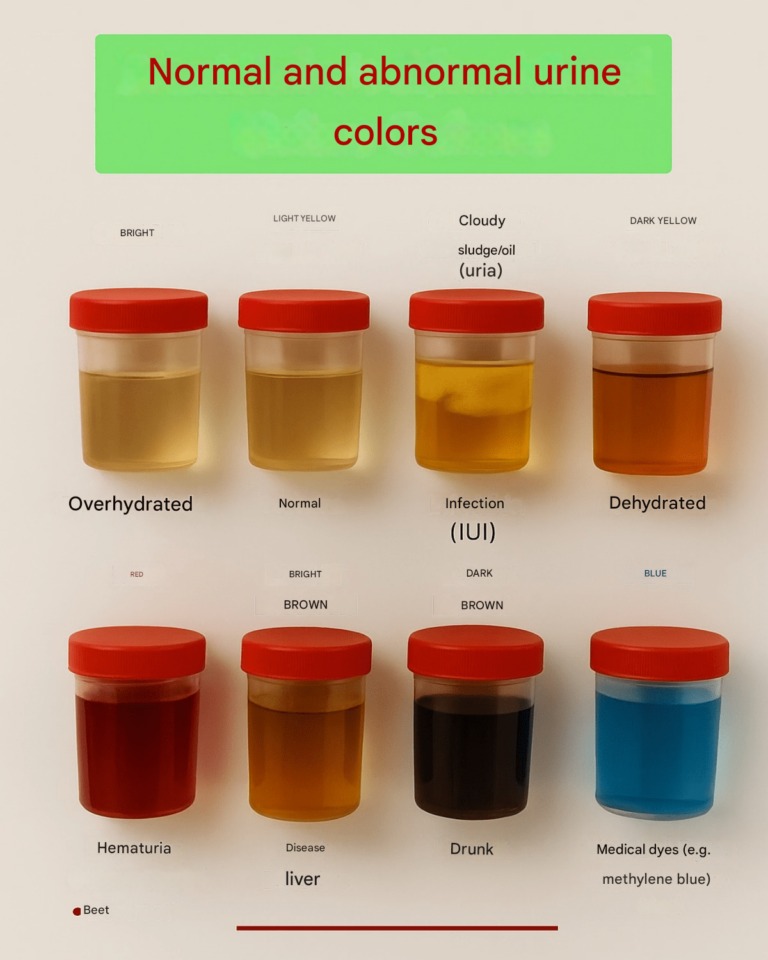
Yes! The color of your urine can reveal a lot about your health, hydration, and even potential medical conditions. Here’s a clear guide:
Urine Color and What It Means
- Pale Yellow to Light Straw
- Meaning: Normal, healthy hydration
- Why: Urochrome pigment from hemoglobin breakdown is at a healthy concentration
- Dark Yellow or Amber
- Meaning: Mild dehydration
- Tip: Drink more water; concentrated urine is darker
- Orange
- Possible Causes: Dehydration, certain medications (like rifampin), or foods like carrots and beets
- Caution: Persistent orange urine may signal liver or bile duct issues
- Pink or Red
- Possible Causes: Beets, berries, or food coloring
- Warning: Could indicate blood in the urine (hematuria), which needs medical evaluation
- Brown
- Possible Causes: Certain medications, foods, or dehydration
- Warning: Persistent brown urine may indicate liver disease or muscle breakdown
- Green or Blue
- Rare Causes: Medications, food dyes, or bacterial infection (Pseudomonas)
- Usually harmless, but should be checked if unexplained
- Cloudy or Foamy
- Possible Causes: Urinary tract infection, kidney problems, or excess protein
- Action: Persistent cloudiness should be evaluated by a doctor
Key Takeaways
- Most urine color changes are harmless and often related to hydration or diet.
- Persistent or unusual colors—especially red, brown, or cloudy—should prompt a medical check-up.
- Track changes along with other symptoms like pain, swelling, or fever.
💡 Tip: Keep a reusable water bottle handy and aim for light yellow urine, which is usually the best indicator of proper hydration.
I can also make a simple color chart of urine and associated health clues—it’s a handy visual guide for quick reference. Do you want me to create that?
