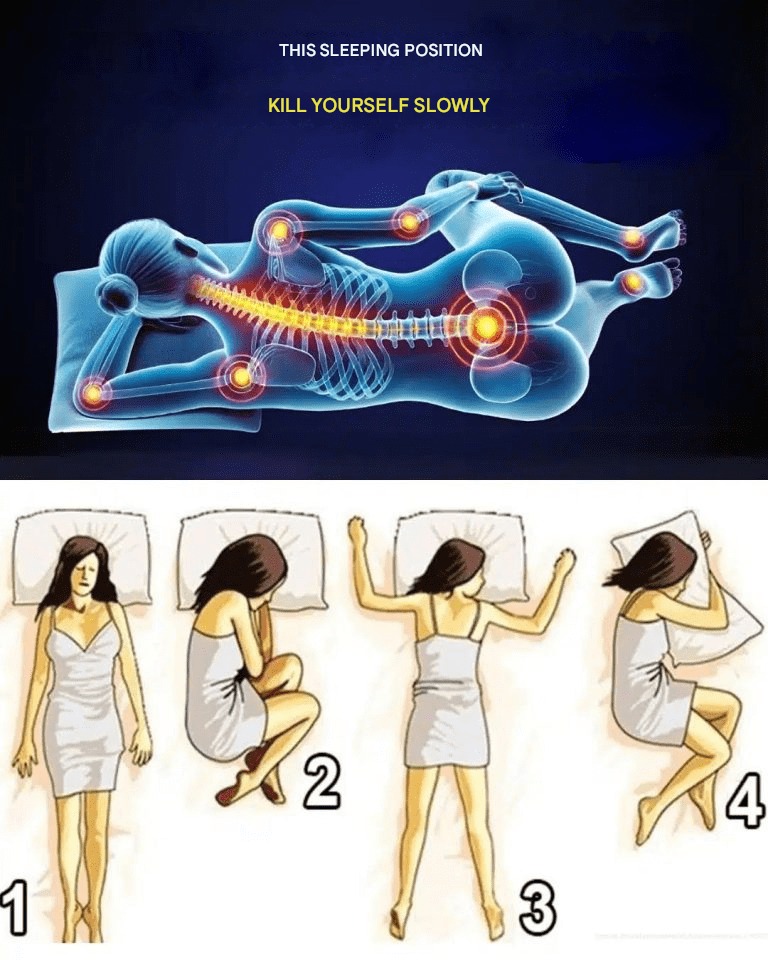
The “most dangerous sleeping position” people often refer to is sleeping on your stomach, though there are nuances depending on your health. Here’s a detailed breakdown:
Why Sleeping Positions Matter
Your sleeping position affects:
- Spine alignment
- Breathing
- Heart health
- Risk of snoring or sleep apnea
Even if you feel comfortable, some positions can cause problems over time.
Stomach Sleeping (Prone Position)
Risks
- Neck strain
- You have to turn your head to breathe, which twists your neck and can lead to stiffness or chronic pain.
- Spinal misalignment
- Your lower back may arch unnaturally, increasing pressure on your spine and muscles.
- Pressure on internal organs
- Lying on your stomach compresses the chest and abdomen, which can affect breathing.
- Increased risk during pregnancy
- For pregnant individuals, stomach sleeping can be uncomfortable and potentially risky after the first trimester.
Safer Sleeping Positions
- Back sleeping (supine)
- Supports spine alignment and reduces pressure points.
- Helps reduce acid reflux if you slightly elevate your head.
- Side sleeping (lateral)
- Often recommended for snoring, sleep apnea, and pregnancy.
- Keeps spine more neutral than stomach sleeping.
- Fetal position
- A variation of side sleeping that’s comfortable for many, but avoid curling too tightly.
Tips to Improve Your Sleep Position
- Use a thin pillow under your head if you sleep on your stomach.
- Place a small pillow under your pelvis to reduce lower back strain.
- Gradually train yourself to sleep on your side or back using pillows for support.
✅ Summary:
Sleeping on your stomach may feel comfortable, but it can strain your neck and spine, making it one of the more dangerous positions over time. Side or back sleeping is generally safer for most people.
If you want, I can also make a visual guide showing the healthiest sleeping positions for spine and neck health, including pillow placement tips. 🛏️
