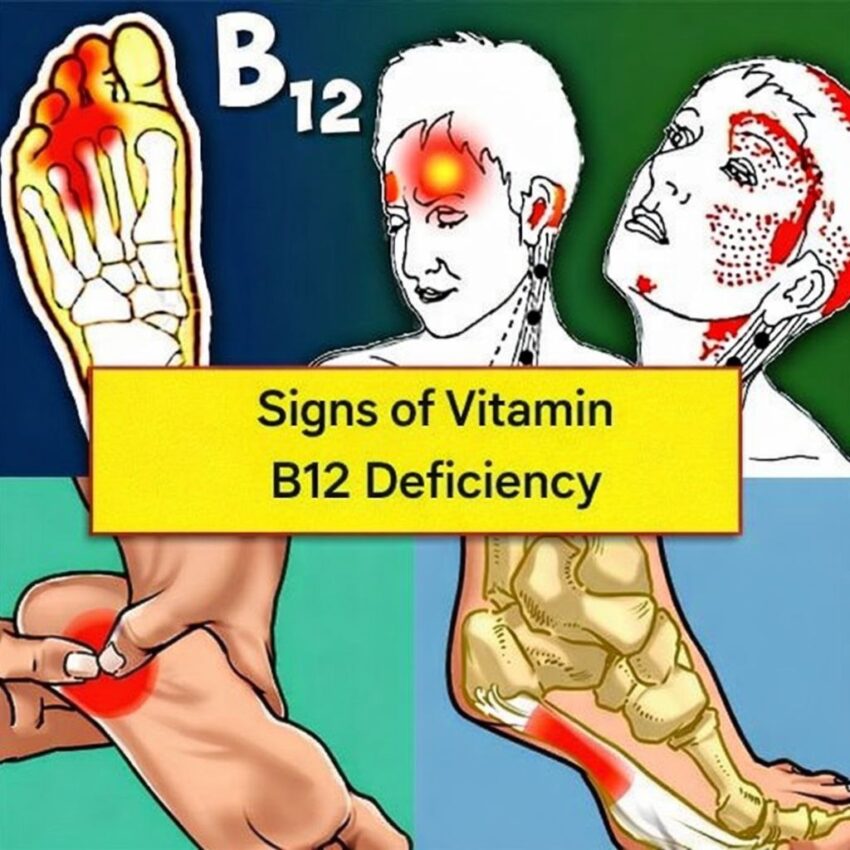
Here’s a thorough guide to the signs of vitamin B12 deficiency and what you should watch for:
1. Common Early Symptoms
- Fatigue and weakness – feeling tired even after enough rest.
- Pale or jaundiced skin – yellowing of skin or eyes due to red blood cell problems.
- Tingling or numbness – especially in hands and feet (neuropathy).
- Shortness of breath and dizziness – due to low red blood cell count.
2. Cognitive & Mood Changes
- Memory problems or confusion – difficulty focusing or remembering things.
- Mood disturbances – depression, irritability, or anxiety.
- Difficulty concentrating – sometimes mistaken for normal aging.
3. Digestive Symptoms
- Loss of appetite
- Weight loss
- Constipation, diarrhea, or bloating
- Glossitis – inflamed, red, or swollen tongue
- Mouth ulcers
4. Neurological Signs (Advanced Deficiency)
- Balance problems – difficulty walking or frequent stumbling.
- Peripheral neuropathy – burning or tingling in extremities.
- Muscle weakness – sometimes misdiagnosed as other conditions.
5. Who’s at Risk
- Older adults – absorption decreases with age.
- Vegans/vegetarians – B12 is mostly in animal products.
- People with digestive issues – e.g., celiac, Crohn’s disease, or low stomach acid.
- Certain medications – e.g., metformin, proton pump inhibitors.
6. What You Should Do
- Get a blood test – B12 levels, methylmalonic acid, and homocysteine.
- Dietary sources – meat, fish, eggs, dairy, fortified cereals.
- Supplements – oral B12 tablets, sublingual drops, or injections (as prescribed).
- Monitor symptoms – especially neurological or cognitive changes.
Key Takeaway
Vitamin B12 deficiency can affect energy, nerves, digestion, and mood, and early detection is crucial. Untreated deficiency can lead to permanent nerve damage.
I can also make a visual chart of B12 deficiency symptoms by body system—shows which signs appear first and which are more serious.
Do you want me to create that?
