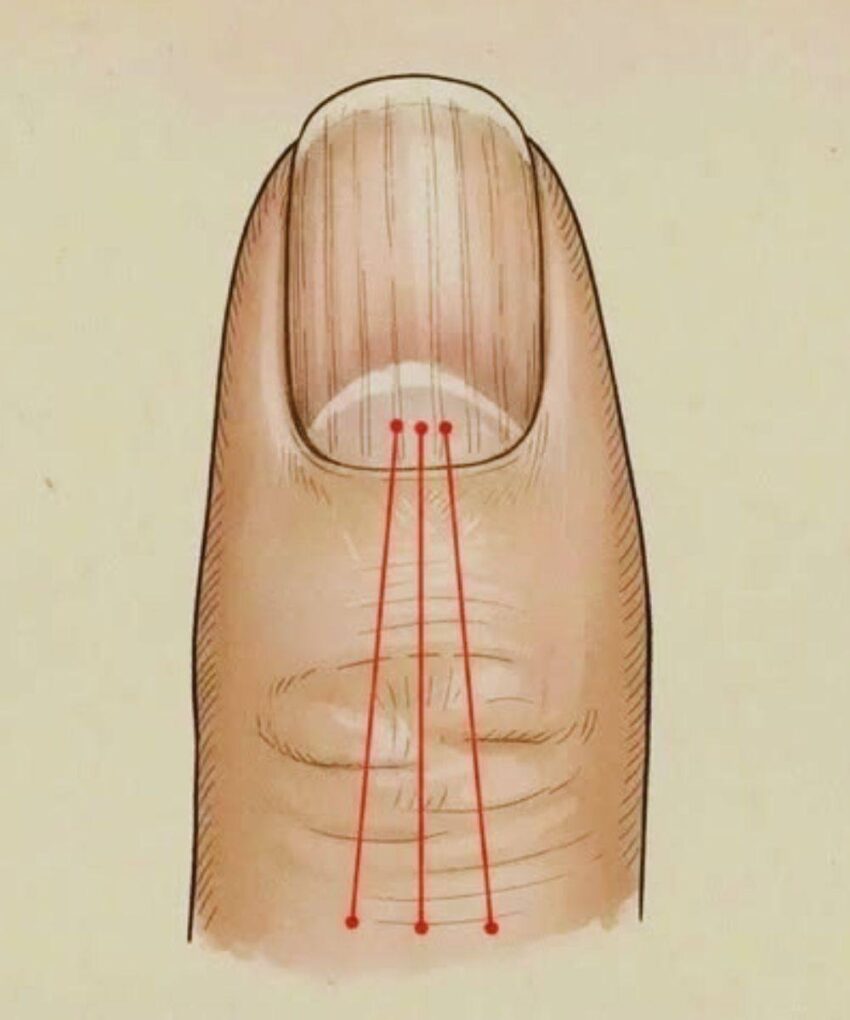
Red lines running vertically on a fingernail—especially when accompanied by striations (ridges)—can be a sign of several conditions, ranging from minor to more serious. Here’s a detailed breakdown:
1. What It Might Be
Vertical red lines on nails are often referred to as splinter hemorrhages. They appear as thin, reddish-brown lines under the nail.
Common Causes
- Minor Trauma
- Hitting or pinching the finger can rupture tiny capillaries under the nail.
- Usually heals as the nail grows out.
- Systemic Conditions
- Endocarditis (infection of the heart lining) can cause splinter hemorrhages in multiple nails.
- Vasculitis or other autoimmune conditions affecting blood vessels.
- Blood disorders (rare, e.g., anemia, clotting disorders).
- Nutritional or Metabolic Factors
- Severe vitamin deficiencies (like Vitamin C or K) can make capillaries fragile.
- Diabetes or other metabolic issues may contribute.
- Medications
- Blood thinners or chemotherapy drugs can sometimes cause tiny nail hemorrhages.
- Underlying Disease
- Rarely, persistent red streaks may indicate melanoma or other nail bed tumors, especially if the streak is dark, widening, or irregular.
2. When to Seek Medical Attention
- Multiple nails affected without trauma
- Associated symptoms like fever, fatigue, or heart murmur
- Streaks that don’t grow out with the nail
- Irregular, dark, or widening streaks that could indicate subungual melanoma
A dermatologist or physician can examine the nail, possibly do blood tests, or use dermoscopy to rule out serious causes.
3. Home Monitoring & Care
- Protect nails from trauma.
- Keep nails trimmed and clean.
- Watch for changes in size, color, or shape.
- Track any other symptoms (fever, fatigue, shortness of breath).
Key Point:
A single, isolated red vertical line after minor trauma is often harmless. But multiple streaks, new-onset changes, or lines that widen should be medically evaluated.
If you want, I can make a visual diagram showing the difference between normal ridges, splinter hemorrhages, and serious nail conditions, so you can see what’s safe versus what needs urgent attention. Do you want me to do that?
