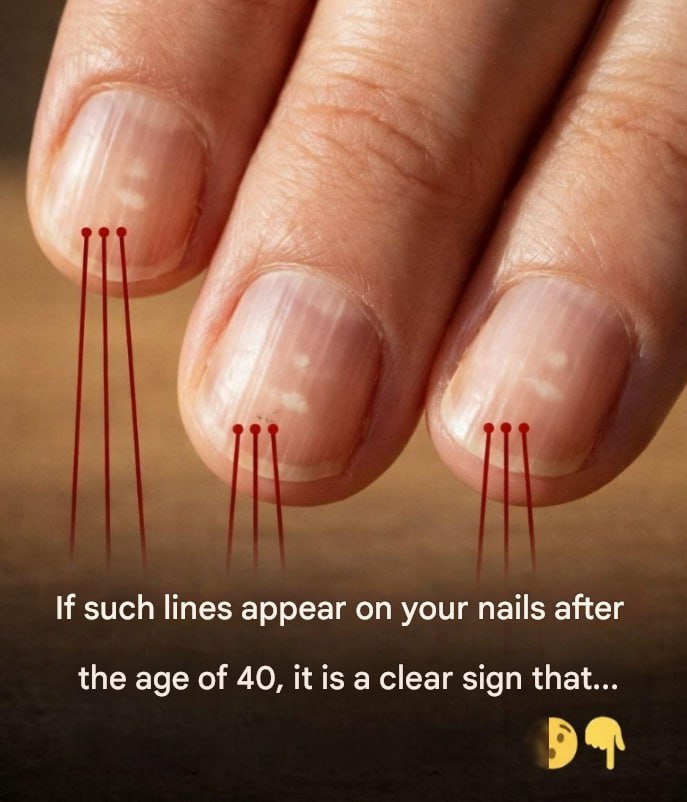
Vertical lines on nails—technically called longitudinal ridges—are very common, especially as people age, including after 40. Here’s a detailed breakdown:
1. What They Are
- Vertical ridges are raised lines running from the cuticle to the tip of the nail.
- They are different from horizontal lines (Beau’s lines), which usually signal systemic issues.
- Usually harmless and often part of normal aging.
2. Causes
- Aging
- Most common cause in people over 40.
- Nails naturally lose moisture and oil, causing ridges to become more pronounced.
- Nutritional Factors
- Deficiencies in protein, iron, zinc, or B vitamins may contribute.
- Severe malnutrition can accentuate ridges.
- Medical Conditions
- Vitamin deficiencies: B12, folate.
- Underlying diseases: Rheumatoid arthritis, peripheral vascular disease, or thyroid disorders can sometimes cause changes.
- Skin conditions: Eczema or psoriasis affecting the nail matrix.
- Trauma
- Repeated minor injury to the nail matrix can leave ridges.
3. When to Be Concerned
Seek medical advice if ridges are accompanied by:
- Color changes (yellowing, dark streaks, white spots)
- Thickening or splitting of the nail
- Pain, swelling, or infection
- Rapid changes in nail shape
These could indicate nutritional deficiencies, infections, or systemic illnesses.
4. Prevention & Management
- Moisturize
- Apply hand cream or cuticle oil daily to keep nails hydrated.
- Nutrition
- Ensure adequate intake of:
- Protein
- Iron-rich foods (lean meats, spinach)
- Zinc (nuts, seeds)
- B vitamins (whole grains, eggs, dairy)
- Ensure adequate intake of:
- Gentle Nail Care
- Avoid harsh chemicals, prolonged water exposure, and aggressive filing.
- Use soft nail files and avoid metal tools that scrape the nail.
- Cosmetic Options
- Buffing lightly can reduce the appearance of ridges.
- Nail polishes or ridge-filling base coats can smooth nails for aesthetic purposes.
Key Takeaway
Vertical ridges after 40 are usually a normal part of aging, not a sign of disease. However, sudden changes, discoloration, or other nail abnormalities should be evaluated by a dermatologist or physician.
If you want, I can make a visual guide showing the difference between normal aging ridges and nails that signal health issues, so it’s easy to recognize. Do you want me to do that?
