Kidneys filter waste, balance fluids, and regulate blood pressure. When they aren’t working properly, the body may show many different warning signs. Some are common, while others may seem unusual.
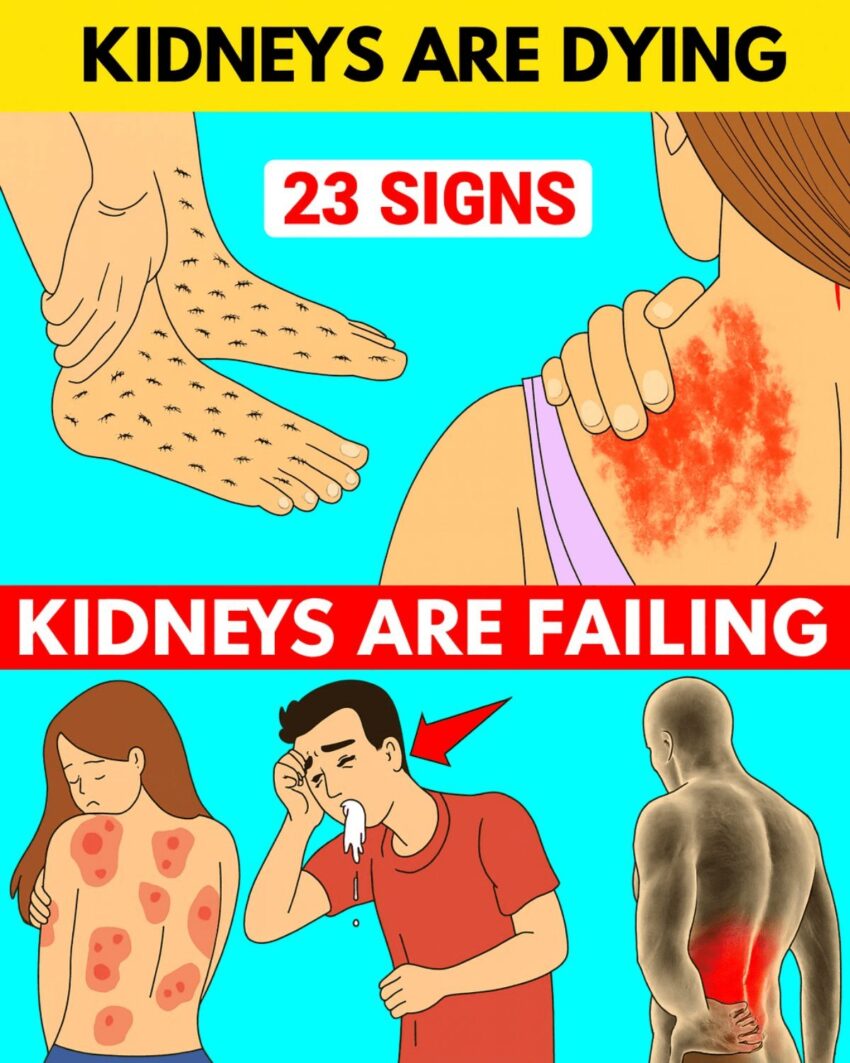
Below are 23 signs that could indicate kidney problems. Having one symptom doesn’t necessarily mean kidney disease, but persistent or multiple symptoms should be checked by a doctor.
Early & Common Signs
1. Changes in urination
- Urinating more or less than usual
- Frequent nighttime urination
2. Foamy or bubbly urine
This may indicate protein in the urine, a possible sign of kidney damage.
3. Blood in urine
Urine may appear pink, red, or brown.
4. Swelling (edema)
Fluid buildup can cause swelling in the feet, ankles, legs, hands, or face.
5. Persistent fatigue
Kidneys help produce a hormone for red blood cells; problems may lead to anemia and tiredness.
6. Trouble concentrating
Waste buildup in the blood can cause mental fog or difficulty focusing.
7. Shortness of breath
Fluid may accumulate in the lungs.
8. High blood pressure
Kidney problems can cause or worsen hypertension.
Digestive & Appetite Changes
9. Loss of appetite
Kidney disease often reduces hunger.
10. Nausea and vomiting
Toxin buildup can irritate the digestive system.
11. Metallic taste in the mouth
Some people notice food tastes different.
12. Bad breath (uremic breath)
Waste buildup can cause a strong ammonia-like odor.
Skin & Body Symptoms
13. Itchy skin
Waste accumulation can lead to severe itching.
14. Dry skin
Poor mineral balance may affect skin hydration.
15. Muscle cramps
Electrolyte imbalance (especially calcium or potassium).
16. Puffiness around the eyes
Often caused by protein leakage in urine.
17. Darkened skin tone
In advanced kidney disease, skin may appear yellowish or grayish.
Pain & Physical Signs
18. Pain in the lower back or side
Kidney infection or stones may cause pain near the flank area.
19. Frequent urinary infections
Repeated UTIs can affect kidney health.
20. Feeling cold all the time
Related to anemia caused by kidney disease.
21. Dizziness or weakness
Reduced oxygen delivery due to anemia.
22. Restless legs
Some people develop restless leg syndrome with kidney problems.
23. Sleep problems
Toxin buildup may disturb sleep patterns.
When to Seek Medical Advice
You should consult a healthcare professional if you notice:
- Persistent swelling
- Blood in urine
- Severe fatigue
- Changes in urination lasting more than a few days
- Unexplained nausea or itching
Early testing usually includes blood tests, urine tests, and blood pressure checks.
✅ Good kidney health habits
- Stay hydrated
- Limit excessive salt and processed foods
- Control blood pressure and blood sugar
- Avoid unnecessary overuse of painkillers
- Maintain a healthy weight
If you’d like, I can also show you 10 foods that naturally help support kidney health and may reduce kidney stress.
