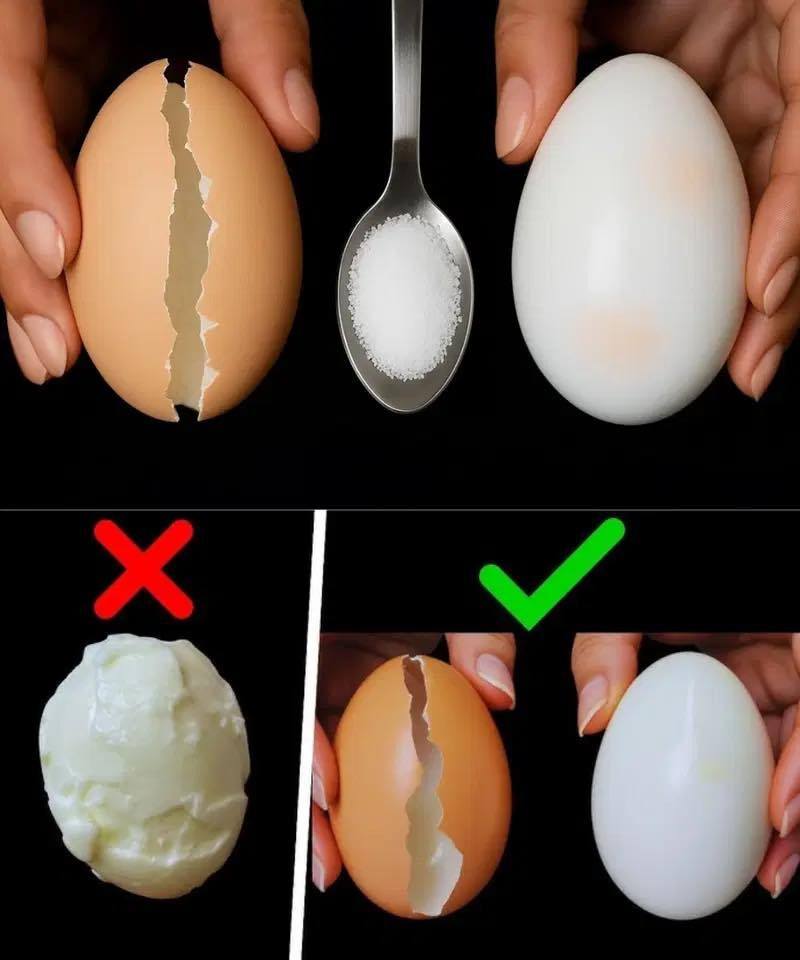
Many chefs say don’t always boil eggs directly in water because temperature shocks can cause cracking, rubbery whites, or overcooked yolks. A gentler cooking method can give you restaurant-quality (“five-star”) eggs. Here are a few better ways:
🥚 1. Steam the Eggs (Chef-Preferred Method)
Steaming cooks eggs evenly and makes them easier to peel.
Steps
- Add about 2–3 cm of water to a pot and bring it to a boil.
- Place eggs in a steamer basket above the water.
- Cover and steam:
- 6 minutes – soft-boiled
- 10–12 minutes – hard-boiled
- Transfer eggs to ice water for 5 minutes before peeling.
Why it works
- Steam cooks evenly
- Shells crack less
- Peeling becomes easier
🥚 2. Start Eggs in Cold Water
Instead of dropping eggs into boiling water:
Steps
- Place eggs in a pot and cover with cold water.
- Heat until water just reaches a boil.
- Turn off heat, cover, and let sit:
- 8–10 minutes for hard-boiled.
- Cool in ice water.
Benefit: Prevents sudden temperature shock.
🥚 3. Oven-Baked Eggs
A trick used in large kitchens.
Steps
- Preheat oven to 325°F (160°C).
- Place eggs in a muffin tin.
- Bake 25–30 minutes.
- Cool in ice water.
Result: Even cooking without boiling water.
🥚 4. Add Vinegar or Salt to Water
If you still boil eggs normally:
- Vinegar helps whites firm up if a shell cracks.
- Salt may reduce leaking and slightly help peeling.
🥚 5. Use an Ice Bath
After cooking, place eggs immediately in ice water.
Benefits
- Stops cooking instantly
- Prevents green ring around yolk
- Makes shells easier to peel
✅ Pro tip: Eggs that are about 7–10 days old peel easier than very fresh eggs.
If you’d like, I can also show you the 5 biggest mistakes people make when boiling eggs (most people unknowingly do at least 3 of them). 🥚
