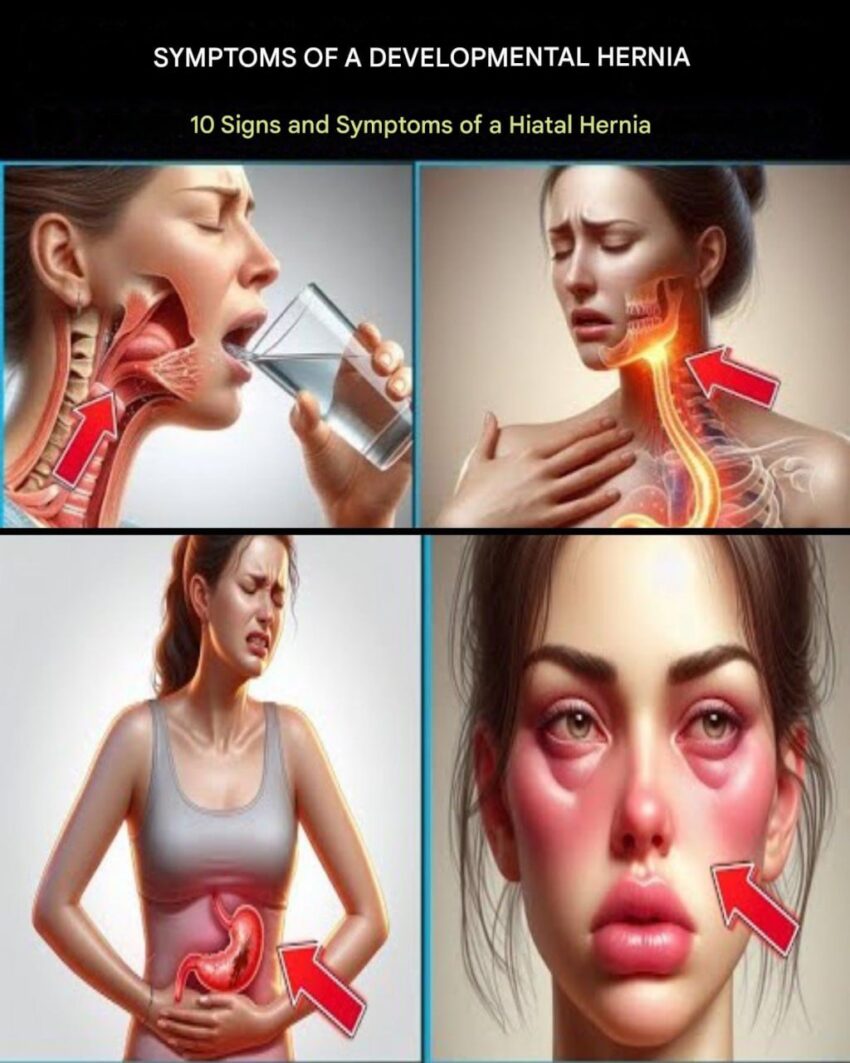
Here’s a detailed guide to 10 common signs and symptoms of a hiatal hernia. Being aware of them can help you recognize the condition early and seek medical care.
1. Heartburn
- A burning sensation in the chest, often after eating, due to acid reflux caused by stomach contents moving into the esophagus.
2. Regurgitation
- Sour or bitter-tasting acid backing up into the throat or mouth.
3. Difficulty Swallowing (Dysphagia)
- Feeling like food is stuck in the chest or throat, often due to pressure from the hernia on the esophagus.
4. Chest Pain
- May mimic heart-related pain; usually worse after meals or when lying down.
5. Belching or Burping
- Frequent burping caused by trapped air or reflux.
6. Feeling Full Quickly
- Early satiety or bloating after eating small amounts due to displacement of the stomach.
7. Nausea
- Mild nausea can occur, sometimes accompanied by vomiting in severe cases.
8. Shortness of Breath
- Large hiatal hernias may push against the diaphragm, making breathing feel slightly restricted.
9. Fatigue
- Chronic discomfort, poor sleep (from reflux at night), or low-grade inflammation can lead to tiredness.
10. Indigestion or Acid Taste
- Persistent stomach upset, sour taste, or heartburn after bending or lying down.
Additional Notes
- Many people with small hiatal hernias are asymptomatic.
- Risk factors include age over 50, obesity, smoking, pregnancy, or heavy lifting.
- If you notice severe chest pain, vomiting blood, or black stools, seek emergency care—it may indicate complications.
💡 Management Tips
- Eat smaller, frequent meals.
- Avoid lying down immediately after eating.
- Reduce acidic, spicy, or fatty foods.
- Maintain a healthy weight.
- Medical treatments include antacids, H2 blockers, proton pump inhibitors, or surgery in severe cases.
If you want, I can make a visual chart showing these 10 hiatal hernia symptoms with icons for quick recognition. Do you want me to do that?
