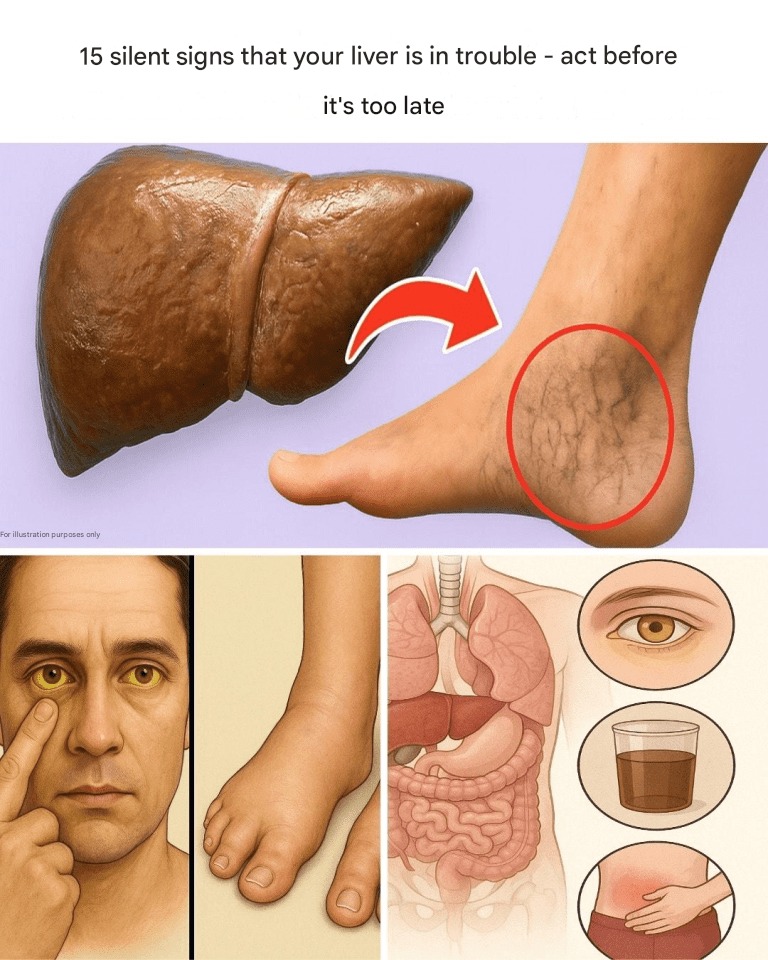
Here’s a detailed guide to 15 silent signs that your liver may be in trouble. The liver is a resilient organ, so problems often develop quietly until damage is significant. Early detection is key.
1. Fatigue and Weakness
- Feeling constantly tired or lacking energy can be an early liver issue due to the organ’s role in metabolism and detoxification.
2. Digestive Issues
- Persistent bloating, nausea, or loss of appetite may indicate liver stress.
3. Abdominal Discomfort
- Pain or swelling in the upper right abdomen (where the liver is located) can signal liver inflammation or enlargement.
4. Yellowing of Skin and Eyes (Jaundice)
- A hallmark sign of liver dysfunction is yellowed skin or sclera (white of the eyes) due to bilirubin buildup.
5. Dark Urine
- Tea-colored or dark urine can indicate bile pigment buildup, a warning of impaired liver function.
6. Pale Stools
- Light or clay-colored stools may reflect reduced bile flow, a common liver problem.
7. Swelling in Legs and Ankles
- Fluid retention (edema) can occur when liver function is compromised, affecting protein regulation.
8. Unexplained Bruising or Bleeding
- The liver produces clotting factors; damage can cause easy bruising or bleeding gums.
9. Itchy Skin
- Persistent itching without rash can occur due to bile salt accumulation in the skin.
10. Nausea or Vomiting
- Chronic nausea, vomiting, or indigestion can be linked to liver problems.
11. Weight Changes
- Unexplained weight loss or gain (especially fluid retention) may signal liver dysfunction.
12. Confusion or Brain Fog
- Toxin buildup due to liver issues can lead to difficulty concentrating, forgetfulness, or mood changes (hepatic encephalopathy in advanced cases).
13. Loss of Appetite
- Chronic loss of appetite or early fullness may be linked to liver stress.
14. Persistent Bad Breath or Metallic Taste
- Toxins not properly processed by the liver can cause halitosis or metallic taste in the mouth.
15. Spider-Like Blood Vessels on Skin
- Small red spider veins on the chest, shoulders, or face can indicate liver disease, particularly cirrhosis.
Key Takeaways
- Many liver problems are silent early on—these signs can appear gradually.
- Risk factors include heavy alcohol use, obesity, viral hepatitis, certain medications, and poor diet.
- Early action: If you notice several of these signs, consult a healthcare professional. Blood tests like ALT, AST, bilirubin, and ultrasound imaging can detect liver issues before severe damage occurs.
💡 Tip: Supporting liver health naturally includes avoiding excessive alcohol, eating a balanced diet, exercising regularly, and staying hydrated.
If you want, I can make a quick visual checklist of these 15 silent liver warning signs so it’s easy to reference daily. Do you want me to do that?
