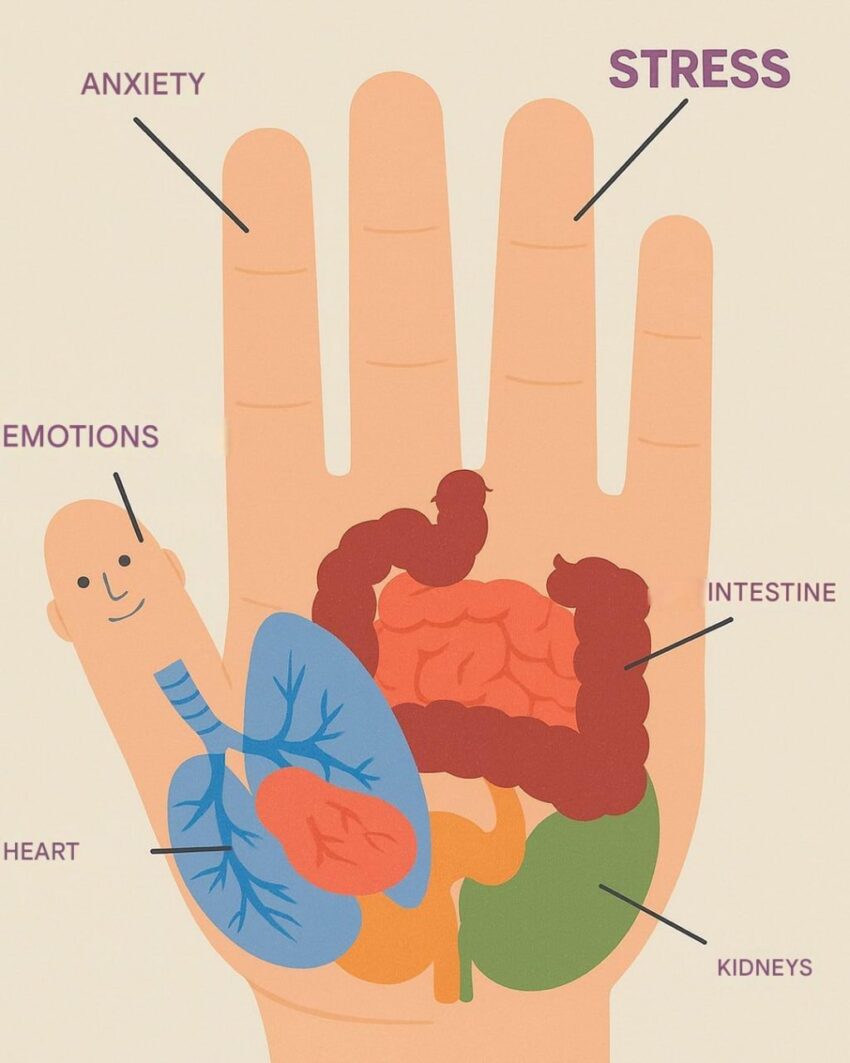
Here’s a clear explanation of hand reflexology and how it works:
What Hand Reflexology Is
- Hand reflexology is a therapeutic technique that applies pressure to specific points on the hands, which correspond to different organs and systems in the body.
- It is based on the idea that the hands (like the feet) contain reflex points that, when stimulated, can promote relaxation, improve circulation, and support overall wellness.
How It Works
- Reflex Points:
- Each part of the hand is linked to a body system or organ.
- For example, the tips of the fingers may correspond to the head and sinuses, while the base of the palm may relate to the lower back and digestive organs.
- Pressure & Massage:
- Practitioners use their fingers, thumbs, or small tools to apply gentle pressure, massage, or circular motions on the reflex points.
- This is thought to stimulate nerve endings, improve blood flow, and release tension.
- Benefits (Reported & Traditional Use):
- Reduces stress and promotes relaxation
- Alleviates tension headaches and muscle pain
- Improves circulation in the hands and body
- Supports digestive and respiratory function (according to reflexology theory)
- Can enhance overall sense of well-being
Practical Tips
- Hand reflexology can be self-administered or done by a trained practitioner.
- Sessions usually last 10–30 minutes per hand.
- Combine with deep breathing or aromatherapy for added relaxation.
- Not a replacement for medical treatment—should be used as complementary therapy.
💡 Extra Tip:
Even simple self-massage of the hands while focusing on breathing can reduce stress and promote relaxation, even if you’re not targeting exact reflex points.
If you want, I can also give a step-by-step beginner’s hand reflexology guide with a diagram showing the main reflex points for key organs.
Do you want me to do that?
