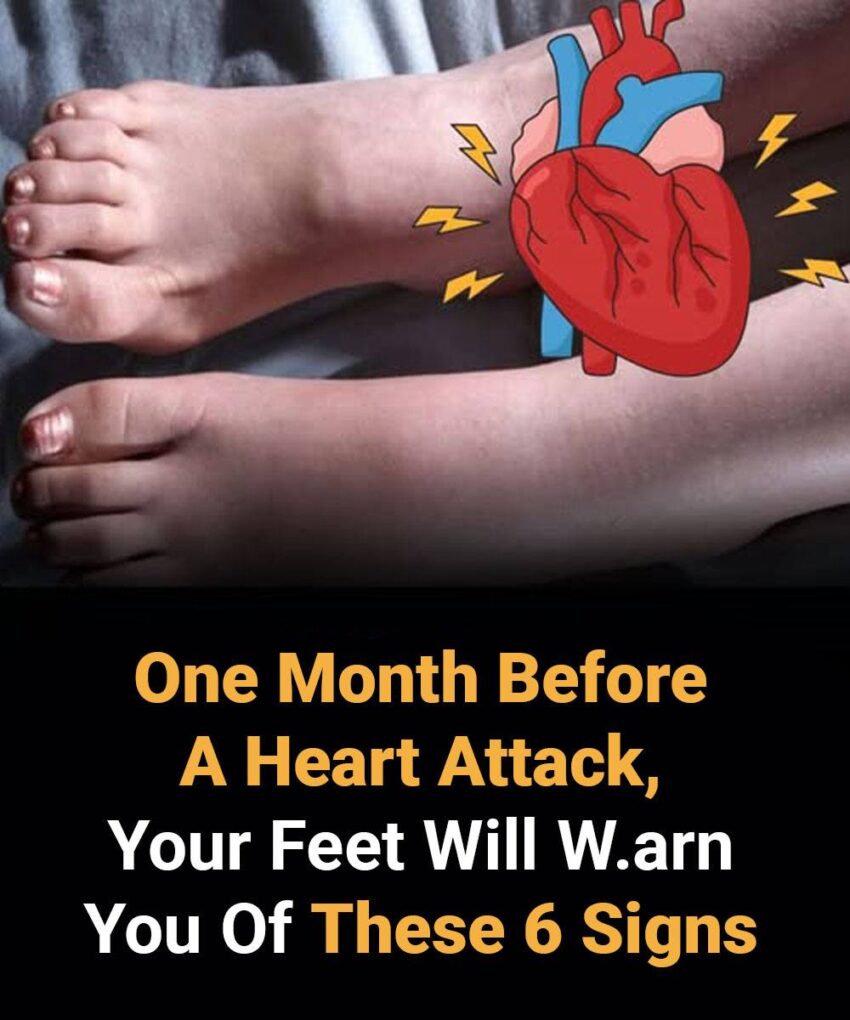
It’s not medically established that your feet will only warn you of a heart attack exactly one month before it happens — heart attacks usually aren’t preceded by a predictable “timeline” of symptoms. However, doctors and cardiovascular specialists do highlight several feet‑related signs of poor circulation or cardiovascular stress that may signal underlying heart or vascular problems — and these issues, if ignored, can increase your risk for a heart attack or other serious events. (Healthline)
🦶 6 Feet or Lower‑Limb Warning Signs That May Be Linked to Heart or Circulation Problems
1. Swelling (Edema) in Feet and Ankles
Persistent puffiness or swelling may occur when the heart isn’t pumping efficiently, causing fluid to accumulate in the lower legs and feet. This can be a sign of early heart failure or poor cardiovascular function. (DailyScan.net)
2. Cold Feet or Toes
Feet that feel unusually cold even in warm conditions may signal reduced blood flow. Poor circulation often affects the extremities first when the heart struggles to deliver adequate blood throughout the body. (Al Bawaba)
3. Discoloration (Blue, Purple, Pale)
A bluish, purplish, or very pale appearance to the feet or toes can reflect low oxygen levels or restricted blood flow, both of which are concerning cardiovascular signals. (DailyScan.net)
4. Numbness or Tingling
Pins‑and‑needles sensations, persistent numbness, or tingling can be a sign that nerves aren’t getting enough oxygenated blood — often linked with peripheral artery disease (PAD), which shares many risk factors with heart disease. (DailyScan.net)
5. Slow‑Healing Sores or Wounds
Cuts, blisters, or sores on the feet that take a long time to heal may indicate poor circulation. Without good blood flow, tissues don’t get the nutrients needed for healthy repair. (DailyScan.net)
6. Pain or Cramping During Walking
Aching, cramping, or pain in the feet, calves, or legs while walking (claudication) can be a symptom of PAD — a circulatory problem tied to atherosclerosis. People with PAD are at higher risk for heart attack and stroke. (Al Bawaba)
⚠️ Important Context
- None of these signs guarantee a heart attack within a month — symptoms vary widely and many causes are non‑cardiac.
- However, these feet and lower‑limb problems may reflect reduced circulation or cardiovascular dysfunction that deserves medical attention. (Healthline)
Common early general warning signs of heart trouble — even weeks before a serious event — can include things like unusual fatigue, shortness of breath, chest discomfort, dizziness, or indigestion‑like sensations. (Healthline)
🩺 What to Do
If you notice persistent swelling, color changes, coldness, pain when walking, or slow‑healing sores on your feet — especially with other symptoms (breathlessness, chest discomfort, fatigue) — it’s wise to consult a doctor promptly. Early evaluation of circulation, heart function, and risk factors can help prevent more serious events. (Healthline)
Would you like a clear list of general early heart attack warning signs (not just feet‑related) that doctors recommend paying attention to? I can list those too.
