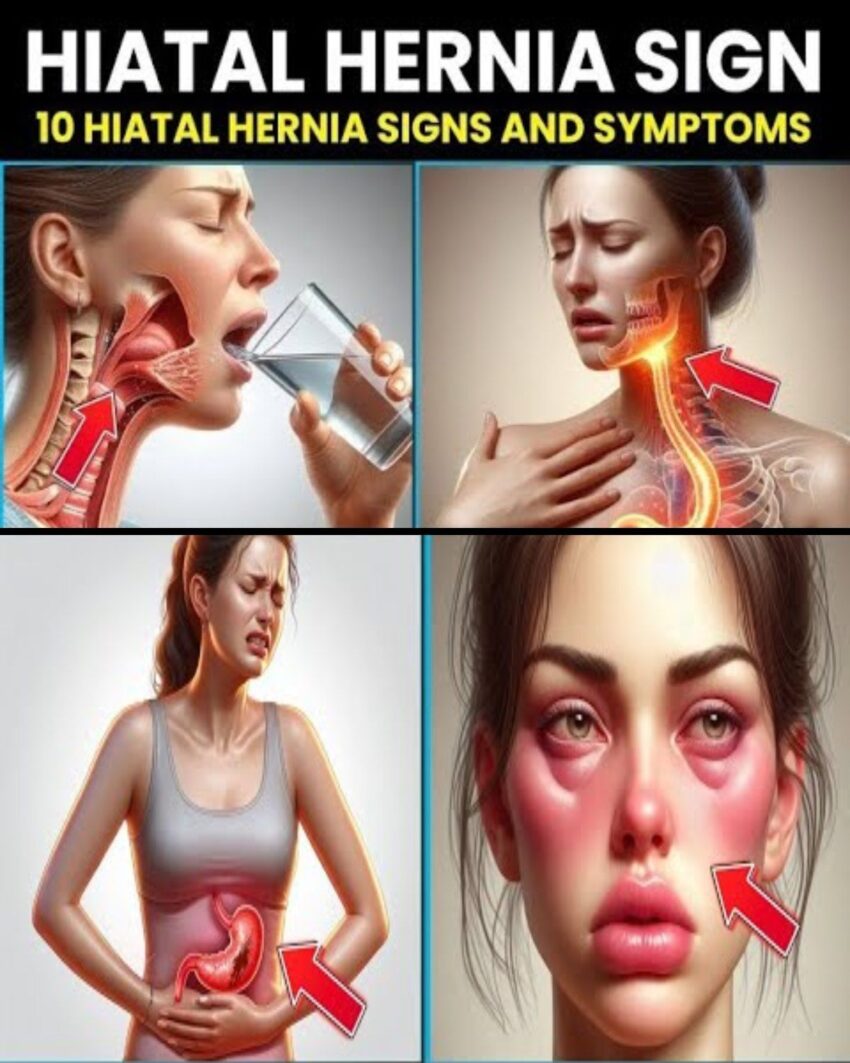
Here are 10 common signs and symptoms of a hiatal hernia that you should be aware of:
- Heartburn – A burning sensation in the chest, often after eating, caused by stomach acid backing up into the esophagus.
- Regurgitation – Acid or food coming back up into the throat or mouth.
- Difficulty swallowing (dysphagia) – Feeling like food is stuck in your chest or throat.
- Chest pain – Sometimes mistaken for heart-related pain; often occurs after meals or when lying down.
- Belching – Frequent burping due to trapped air or acid reflux.
- Feeling full quickly (early satiety) – Stomach fills faster than usual, causing discomfort after small meals.
- Shortness of breath – Pressure from the hernia can push against the diaphragm.
- Nausea or vomiting – Less common, but can occur if the hernia is large.
- Acid reflux symptoms at night – Coughing, hoarseness, or a sour taste in the mouth when lying down.
- Fatigue or discomfort after meals – General malaise or bloating due to digestive irritation.
Note: Many people with a hiatal hernia have no symptoms at all. Symptoms often worsen with large meals, bending over, or lying down. Persistent or severe symptoms should be evaluated by a healthcare professional to rule out complications like gastroesophageal reflux disease (GERD).
If you want, I can also break down how to tell a small hiatal hernia from a large one based on symptoms—it’s surprisingly distinct. Do you want me to do that?
