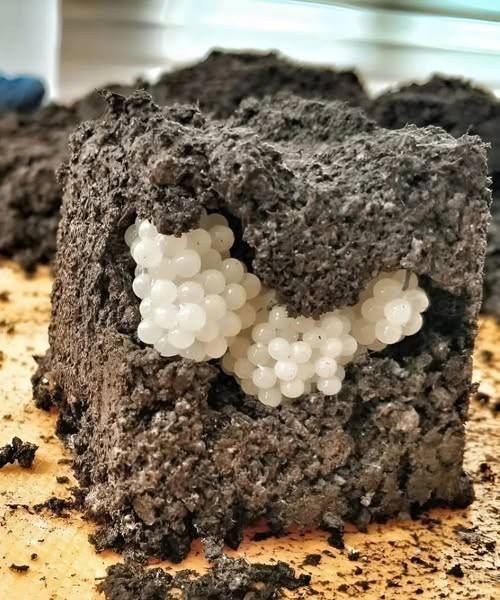
Laevicaulis alte is a species of terrestrial slug (a shell‑less land snail) in the family Veronicellidae, commonly called the tropical leatherleaf slug.(Wikipedia)
🐌 What It Is
- It’s a land slug — soft‑bodied, shell‑less mollusk with a leathery appearance.(Wikipedia)
- Adults can grow several centimeters long and have a dark body with a pale central line or keel.(Bali Wildlife)
- Its skin is somewhat granular and its body flattened compared to other slugs.(Wikipedia)
🌍 Native and Introduced Range
- Probably native to sub‑Saharan Africa.(Wikipedia)
- It has been introduced to numerous tropical and subtropical areas worldwide, including parts of Asia, Australia, the Pacific Islands, and the United States (e.g., Hawaii).(Wikipedia)
🍃 Habitat and Behavior
- Found in gardens, agricultural areas, and moist environments.(Bali Wildlife)
- Mostly nocturnal, feeding at night and often hiding under debris or soil during the day.(Bali Wildlife)
🌱 Diet and Impact
- It’s mainly a herbivore and detritivore, eating plant material and decaying vegetation.(Bali Wildlife)
- In many regions it’s considered a pest, because it can damage crops, vegetables, and ornamental plants.(Bali Wildlife)
⚠️ Human and Animal Health
- Like many slugs, Laevicaulis alte can act as an intermediate host for Angiostrongylus cantonensis, the rat lungworm, which can cause eosinophilic meningitis in humans if infected slugs are handled improperly or ingested raw.(Wikipedia)
🐾 Interesting Facts
- It has a leathery texture — hence the name “leatherleaf.”(Bali Wildlife)
- Unlike snails, slugs lack a shell and rely on mucus for movement and moisture retention.(Bali Wildlife)
If you’d like, I can explain how to tell this slug apart from similar species or how to manage them in gardens. Just let me know which direction you want!
