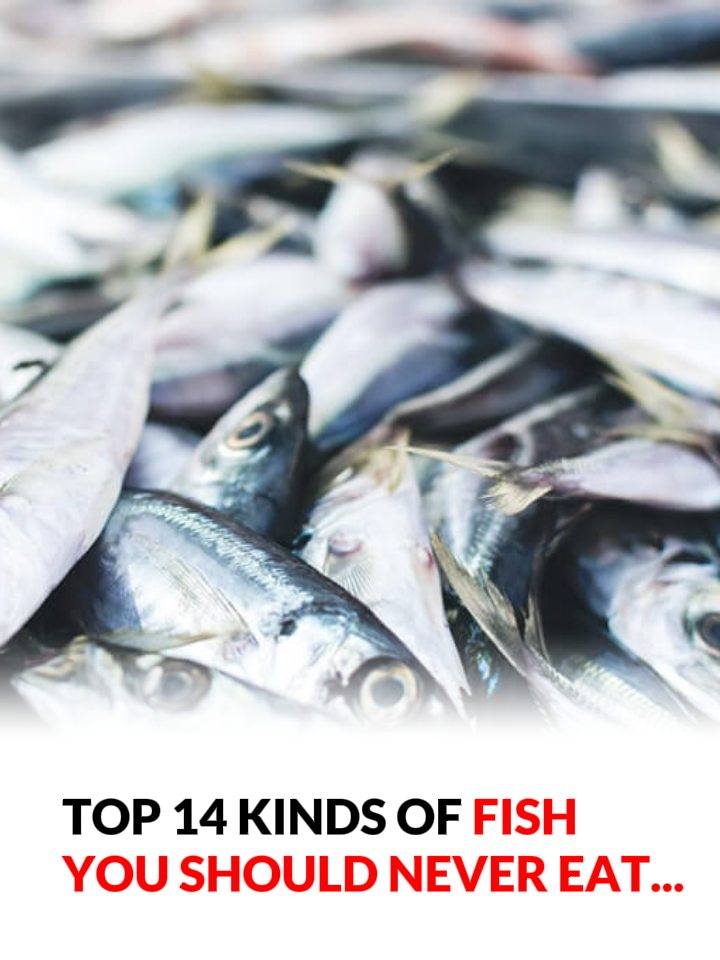
Here’s a carefully compiled list of 14 types of fish to avoid due to high mercury levels, environmental concerns, or health risks. These are often flagged by experts and food safety organizations.
⚠️ Fish to Avoid
1–5: High Mercury Fish
- Shark – Very high mercury; avoid especially for children and pregnant women.
- Swordfish – Large predatory fish with high mercury content.
- King Mackerel – High mercury, not safe for frequent consumption.
- Tilefish (Gulf of Mexico) – Extremely high mercury levels.
- Bigeye Tuna – Higher mercury than canned light tuna; skip if possible.
6–10: Overfished or Environmentally Risky
- Orange Roughy – Long-lived species; overfished and high in mercury.
- Chilean Sea Bass / Patagonian Toothfish – Overfished; unsustainable.
- Bluefin Tuna – Critically overfished; avoid for conservation reasons.
- Wild Atlantic Salmon (certain sources) – May contain PCBs if farmed unsustainably.
- Imported or Farmed Shrimp – Often high in antibiotics and chemicals.
11–14: Other Health Risks
- Smoked Fish with Added Nitrites – Can contain carcinogens when consumed excessively.
- Marlin – High mercury and often endangered.
- Grouper – Mercury and ciguatera toxin risk.
- Freshwater Fish from Polluted Waters – Catfish, carp, or bass from contaminated rivers/lakes may carry heavy metals or pollutants.
💡 Tips for Safer Fish Consumption
- Prefer smaller, short-lived fish like sardines, anchovies, or herring.
- Choose wild-caught Alaskan salmon or sustainably farmed fish.
- Limit high-mercury fish to occasional consumption or avoid altogether.
- Check local advisories for fish caught in rivers or lakes near you.
If you want, I can make a simple “Safe vs Risky Fish Cheat Sheet” for everyday shopping that’s easy to remember.
