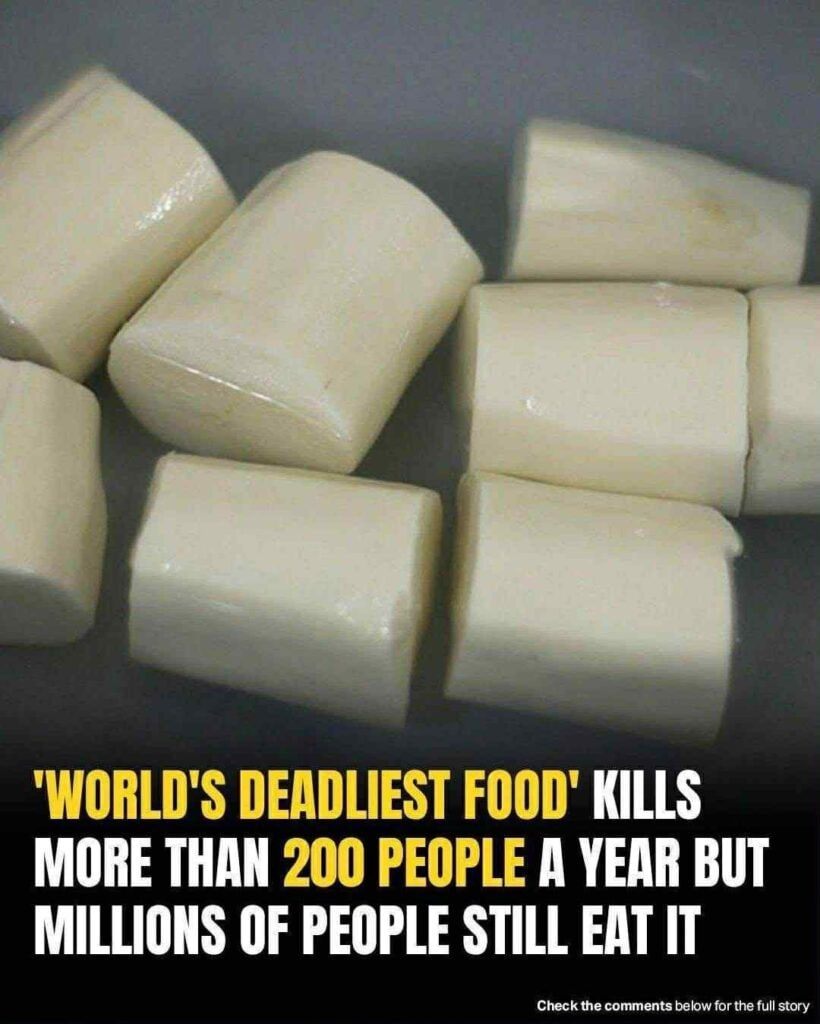
One food that’s often called the “world’s deadliest food” because it kills more than 200 people per year is cassava — a starchy root that is a dietary staple for hundreds of millions of people worldwide. (Live Science)
🥔 Cassava: A Staple That Can Be Deadly
- What it is: Cassava (also known as yuca or manioc) is a root vegetable eaten by an estimated about 500–800 million people globally as a key source of carbohydrates. (Yohanpost)
- Why it’s dangerous: Cassava naturally contains cyanogenic compounds that can break down into hydrogen cyanide — a very toxic substance — if the plant isn’t prepared correctly. (Live Science)
- Annual death toll: The World Health Organization (WHO) estimates that around 200+ people die each year due to cassava poisoning. (Live Science)
- Who’s affected: Most deaths occur where food preparation is rushed or inadequate, especially during food shortages, famine, or among poorer communities. (Yohanpost)
- How poisoning happens: Eating cassava that’s eaten raw or not processed properly allows cyanide to enter the body, potentially leading to acute poisoning or chronic conditions like konzo, a neurological disease causing paralysis. (Likya)
🧠 More Context on Dangerous Foods
While cassava is notable because of its combination of widespread use and toxic potential, other foods can also be very dangerous if not handled properly:
- Tetrodotoxin-containing pufferfish (fugu): Rare, extremely toxic fish that can be fatal if improperly prepared — though strict regulations and trained chefs reduce risk in places like Japan. (Live Science)
- Death cap mushrooms: Some wild fungi like the death cap contain toxins that can cause liver and kidney failure; misidentification can lead to fatal poisonings. (Live Science)
- General foodborne illness: In addition to individual hazardous foods, unsafe or contaminated food overall leads to hundreds of thousands of deaths annually from foodborne diseases (e.g., salmonella, norovirus, Listeria) — far more than 200 each year worldwide. (World Health Organization)
If you’re interested, I can also list other dangerous foods and explain how they cause harm — from toxic traditional delicacies to common foods that pose risk when mishandled.
