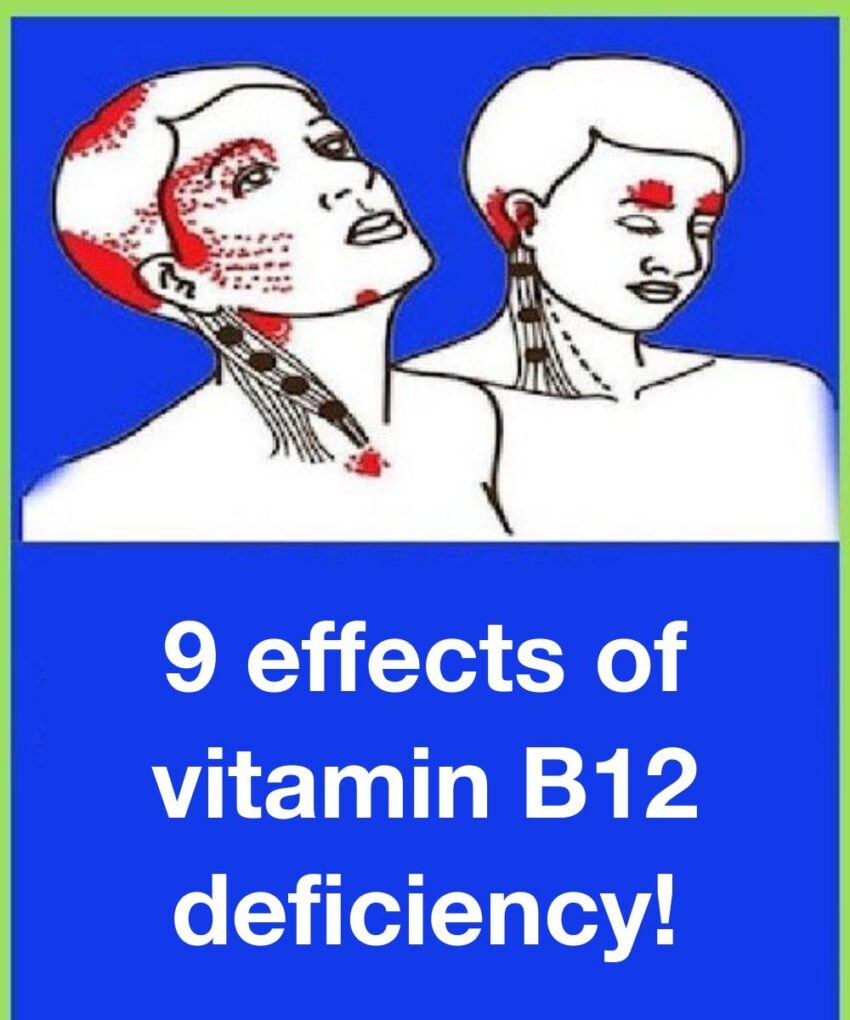
Vitamin B12 deficiency can affect multiple systems in the body, especially the nervous system and blood formation. Here are 11 common symptoms:
- Fatigue – Feeling unusually tired or weak due to impaired red blood cell production.
- Pale or jaundiced skin – Lack of B12 can affect red blood cells, causing pallor; some may also develop a slight yellow tinge.
- Shortness of breath and dizziness – Due to anemia caused by insufficient B12.
- Numbness or tingling – Often in hands and feet, caused by nerve damage (peripheral neuropathy).
- Difficulty walking or balance problems – Impaired nerve function can affect coordination.
- Cognitive disturbances – Memory loss, confusion, or difficulty thinking clearly.
- Mood changes – Depression, irritability, or anxiety can occur.
- Glossitis and mouth ulcers – Inflamed, red tongue and sores in the mouth.
- Vision problems – Damage to the optic nerve can lead to blurred or disturbed vision.
- Heart palpitations – Related to anemia and low oxygen delivery to tissues.
- Digestive issues – Nausea, constipation, loss of appetite, or diarrhea.
⚠️ Note: Some symptoms, especially neurological ones, may appear even before anemia develops. Early detection is key to prevent irreversible nerve damage.
If you want, I can also make a quick guide on how to check B12 levels and food sources to prevent deficiency. Do you want me to do that?
