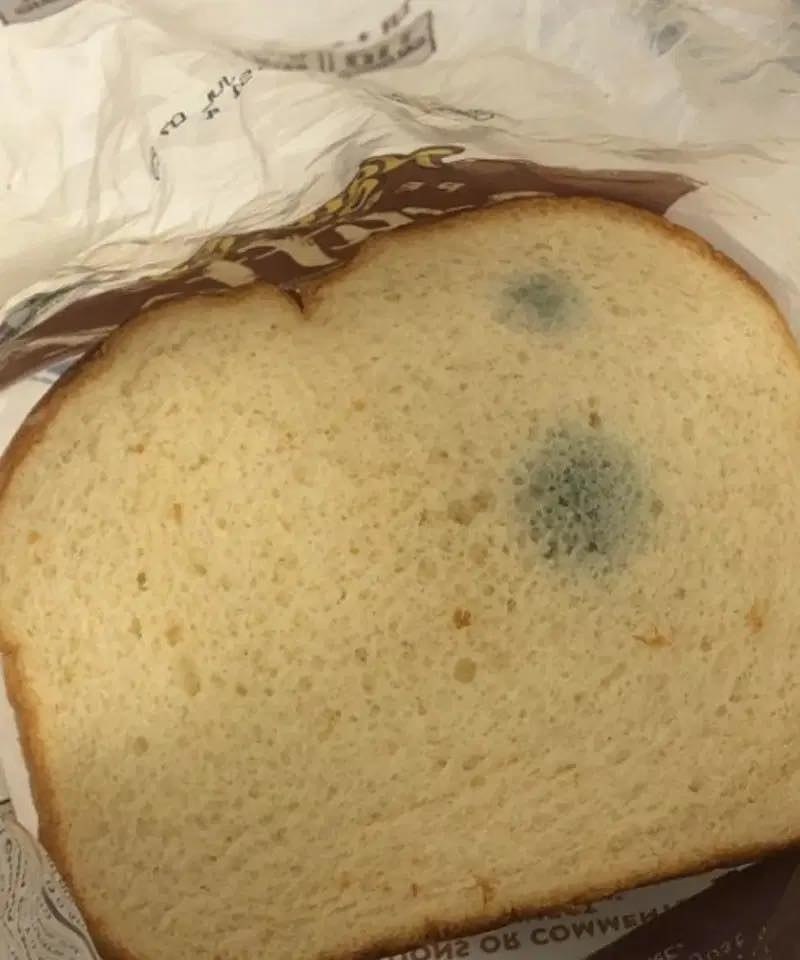
If you’re seeing greenish spots on bread, it is almost always mold.
🍞 What It Is
Green, blue-green, or fuzzy spots on bread are typically mold fungi such as:
- Penicillium
- Aspergillus
- Rhizopus (black bread mold)
They start as tiny pale dots and quickly turn green, blue, gray, or black as they grow.
⚠️ Is It Safe to Cut Off the Mold?
No.
With soft foods like bread, mold roots (called hyphae) spread deeper than what you can see. Even if you cut off the visible spot, the rest of the loaf may already be contaminated.
Best action: Throw the whole loaf away.
🤢 Why You Shouldn’t Eat It
Mold can:
- Produce mycotoxins
- Cause allergic reactions
- Trigger respiratory issues
- Upset your stomach
Some people are more sensitive, especially:
- Children
- Elderly
- Pregnant individuals
- People with weakened immune systems
🧊 Why It Happens
Bread molds easily because it:
- Contains moisture
- Has carbohydrates (food for mold)
- Often lacks preservatives (especially homemade or bakery bread)
Warm temperatures speed up growth.
🧼 What To Do After
- Seal moldy bread in a bag before throwing away
- Clean the bread box or storage area
- Wash hands after handling
🛑 When It’s NOT Mold
If the spots:
- Are bright green seeds (like herbs or seasoning)
- Are from food coloring
- Are part of a specialty bread (like spinach bread)
Then it may be normal. But fuzzy texture + odd smell = mold.
If you want, you can describe:
- The color
- Texture (fuzzy? flat?)
- Smell
- Whether it’s store-bought or homemade
I can help you confirm what it likely is.
