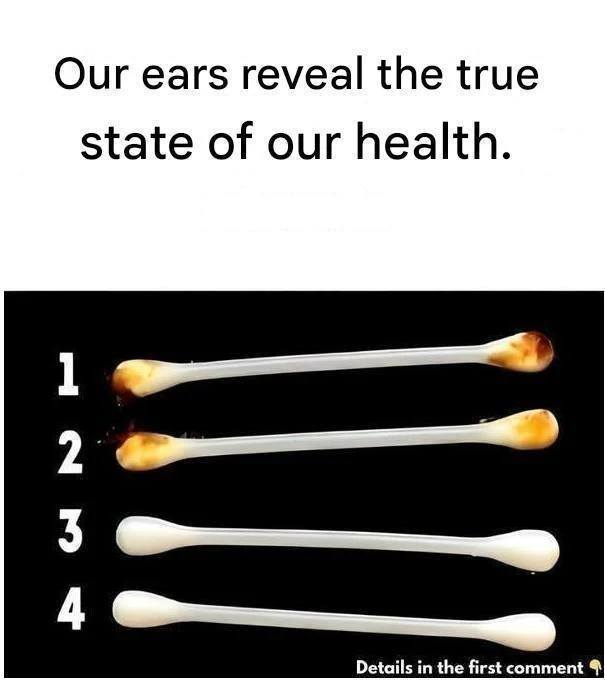
It’s true that ears can sometimes reveal clues about your overall health, though they aren’t a complete diagnostic tool. Here’s a detailed breakdown of what certain ear signs may indicate:
1. Ear Shape and Folds
- Attached vs. free earlobes: Mostly genetic; minor studies link attached earlobes with certain traits, but not a health concern.
- Creased earlobes (Frank’s sign): A diagonal crease on the earlobe has been associated in some studies with higher risk of cardiovascular disease, though it’s not definitive.
2. Ear Color
- Red or flushed ears: Could indicate high blood pressure, inflammation, or fever.
- Pale or bluish ears: May suggest poor circulation or low oxygen levels.
3. Earwax & Skin
- Excessive earwax: Can be normal, but sudden changes may indicate infections.
- Dry, flaky skin: Could be a sign of eczema or nutritional deficiencies.
4. Hearing Changes
- Sudden hearing loss or ringing (tinnitus): Could indicate infections, ear injury, or even cardiovascular issues.
5. Lumps, Swelling, or Pain
- Tender or swollen ears: Often due to infection or inflammation.
- Hard lumps behind the ear: Could be benign cysts or, rarely, signs of systemic disease.
⚠️ Important Note
While ears can give clues about cardiovascular health, circulation, or infections, they are not a replacement for medical testing. Always consult a healthcare provider for persistent changes or symptoms.
If you want, I can make a simple “ear health chart” showing what different signs in your ears may suggest about your body’s health—easy to check at home. Do you want me to do that?
