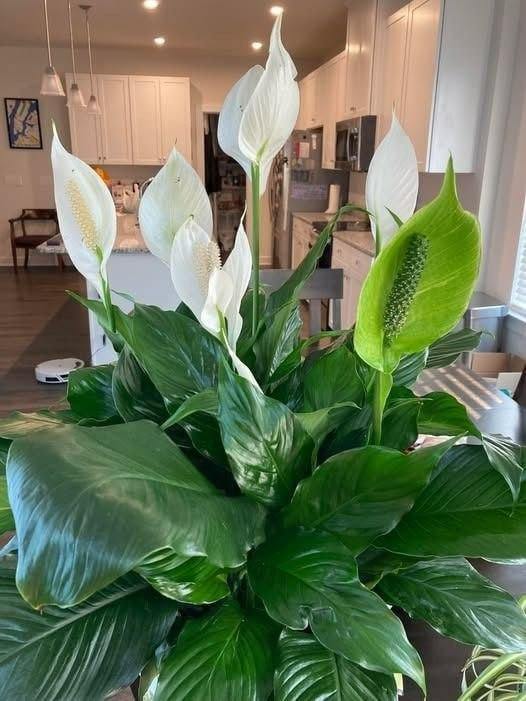
Spathiphyllum wallisii, commonly known as the peace lily, is a popular houseplant admired for its elegant white flowers and air-purifying properties. Here’s a detailed overview:
🌿 Description
- Family: Araceae
- Origin: Tropical regions of Central and South America
- Appearance:
- Dark green, glossy leaves
- White, hood-like spathes (often called flowers) surrounding a central spadix
- Size: Typically 1–3 feet tall indoors, depending on variety
🌱 Care Guide
- Light:
- Thrives in indirect, bright light
- Can tolerate low light but may flower less
- Watering:
- Keep soil consistently moist but not waterlogged
- Leaves may droop when thirsty—an easy watering cue
- Humidity & Temperature:
- Prefers high humidity and temperatures between 65–80°F (18–27°C)
- Avoid cold drafts
- Soil:
- Well-draining potting mix rich in organic matter
- Fertilizing:
- Feed every 6–8 weeks during the growing season with a balanced houseplant fertilizer
🌟 Benefits
- Air purification: Known to filter indoor toxins like formaldehyde, benzene, and trichloroethylene
- Aesthetic appeal: Elegant flowers and lush foliage brighten indoor spaces
- Easy to maintain: Tolerates low-light conditions better than many flowering houseplants
⚠️ Caution
- Toxic to pets: Peace lily contains calcium oxalate crystals; ingestion can cause mouth irritation, drooling, or vomiting in cats and dogs
- Human handling: Usually safe, but avoid ingesting
If you want, I can also give tips to make your Spathiphyllum wallisii bloom more often indoors, which many owners struggle with. Do you want me to do that?
