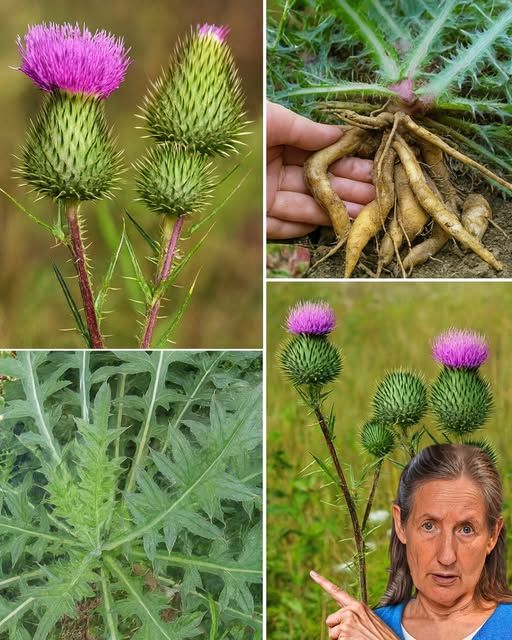
Spear thistle 🌿 (also called bull thistle, Cirsium vulgare)—spiky, dramatic, and way tougher than it looks.
Here’s the quick, useful rundown:
What it is
- A biennial thistle (first year leaves, second year tall flowering stem)
- Native to Europe & western Asia; invasive in many other places
- Recognizable by deeply spined leaves and purple flower heads
Why people care about it
- Pollinator magnet 🐝🦋 — bees and butterflies love it
- Bird food — goldfinches especially go wild for the seeds
- Surprisingly medicinal in traditional use
Traditional / folk uses (not medical advice)
- Roots and leaves were used for:
- Supporting digestion
- Mild diuretic effects
- Clearing phlegm and chest congestion (teas or decoctions)
- Young stems were sometimes peeled and eaten like a vegetable (carefully!)
Caution ⚠️
- The spines are no joke—gloves always
- It spreads aggressively if not managed
- Not a substitute for proper medical treatment
Fun fact
Despite being labeled a “weed,” spear thistle is one of the most important nectar sources in late summer when other flowers fade.
If you’re asking about it for identification, medicinal use, removal, or symbolism, tell me which angle you’re curious about and I’ll zoom in 🌱
