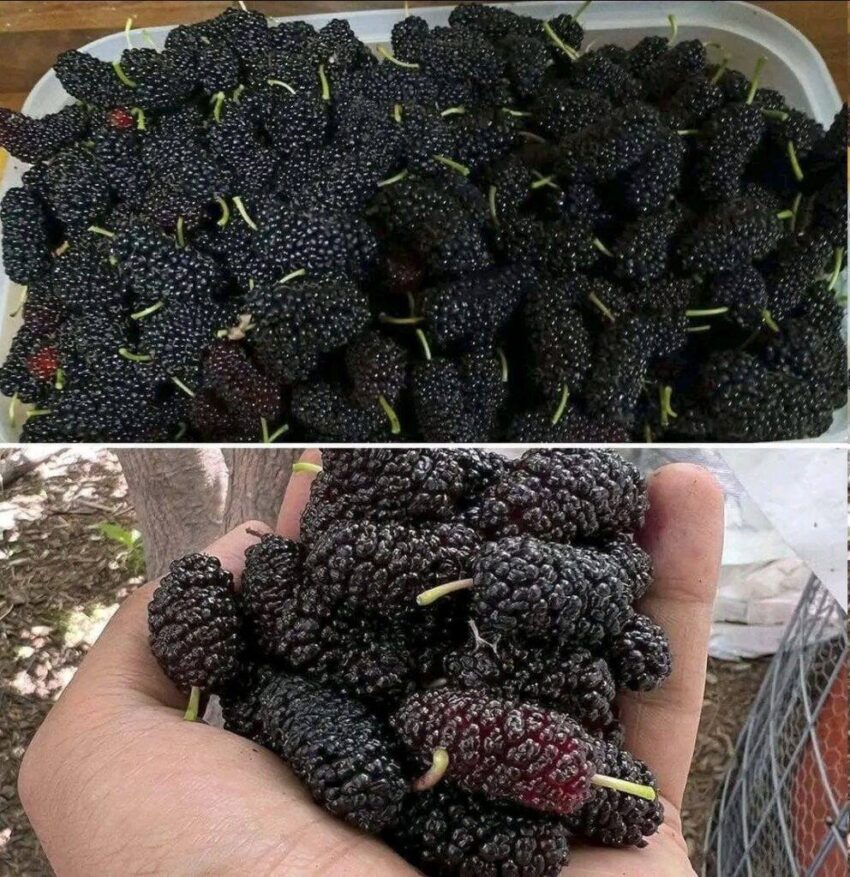
Morus macroura is a fascinating one 🌳—it’s a species of mulberry tree, often called long mulberry, Himalayan mulberry, or king mulberry.
Morus macroura (Long Mulberry)
What It Is
- A fast-growing mulberry tree native to parts of South and Southeast Asia (Himalayas, China, Pakistan, India).
- Famous for its very long fruits—some can reach 8–15 cm (3–6 inches) long.
Key Characteristics
- Fruit:
- Long, slender mulberries
- Color ranges from deep red to dark purple/black when ripe
- Sweet, juicy, slightly tart flavor
- Leaves:
- Large, heart-shaped, bright green
- Often used as fodder in some regions
- Tree Size:
- Can reach 10–15 meters (30–50 ft) if not pruned
- Growth:
- Fast-growing
- Deciduous
Uses
- Edible fruit:
- Eaten fresh
- Used in jams, syrups, juices, wines, and desserts
- Traditional medicine:
- Used in some cultures for digestion, inflammation, and blood sugar support
- Agroforestry:
- Shade tree
- Soil stabilization
- Silkworm feeding:
- Leaves can be used similarly to other mulberry species
Growing Conditions
- Climate: Subtropical to temperate
- Sun: Full sun
- Soil: Well-draining, fertile soil
- Water: Moderate; drought-tolerant once established
- Propagation: Cuttings or seeds (cuttings preferred for fruit quality)
Why It’s Special
- Much larger fruit than common mulberry (Morus alba or Morus nigra)
- High in antioxidants, vitamin C, and fiber
- Popular with home growers because it fruits quickly and heavily
If you’d like, I can help with:
- How to grow Morus macroura at home
- Difference between Morus macroura and other mulberries
- Uses for the fruit (recipes, preservation)
Just tell me what angle you want 🌱🍇
