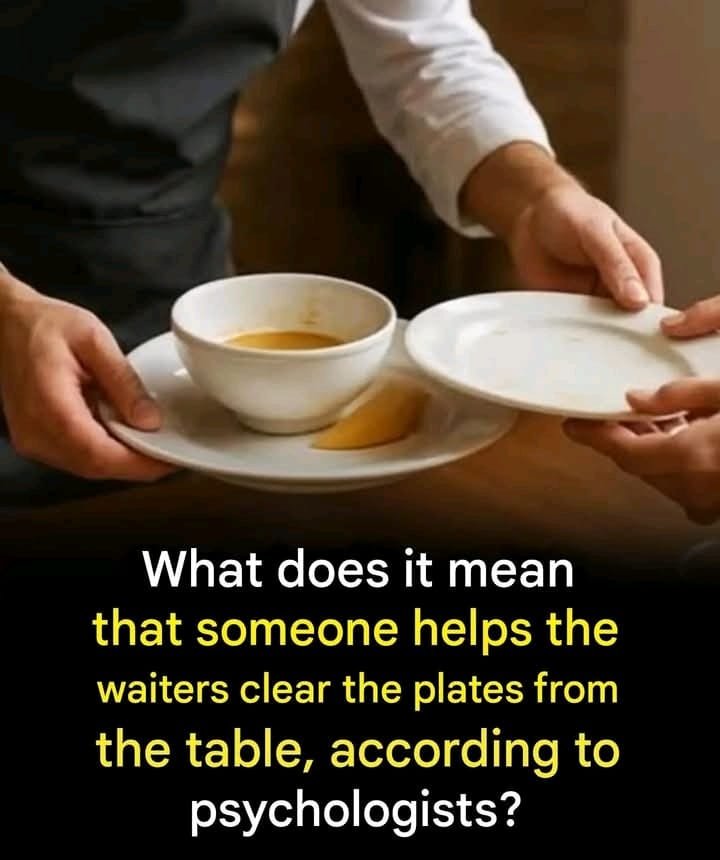
Ah, this touches on social psychology and prosocial behavior! Psychologists have studied small acts like helping a waiter clear plates, and they reveal a lot about human motivation, personality, and social norms. Here’s a breakdown:
1. Why People Do It
- Altruism: Some genuinely enjoy helping others without expecting anything in return.
- Reciprocity Norm: People may help because they expect kindness to be returned in the future (or just feel socially obligated).
- Impression Management: Helping can make a person appear considerate or generous to others, boosting social approval.
- Mood Effects: People in a good mood are more likely to help, even in small ways like clearing plates.
2. Psychological Insights
- Small Acts, Big Signals: Even a minor gesture, like clearing plates, can reflect personality traits such as empathy, conscientiousness, or social sensitivity.
- Context Matters: Research shows people help more in private settings if they genuinely care, but public acts may be influenced by how others perceive them.
- “Warm-Glow” Effect: Helping gives the helper a positive feeling—sometimes called the “helper’s high.”
3. Studies on Everyday Helping
- Study Example: In a restaurant simulation, diners were more likely to help when they had been treated kindly by the staff first. This is called norm of reciprocity in action.
- Personality Links: People scoring high on agreeableness in the Big Five personality traits tend to do small helpful acts spontaneously.
In short, when someone helps a waiter clear plates, psychologists see it as a window into empathy, social norms, and personality, not just politeness. It’s both a tiny act and a meaningful signal about the person’s social behavior.
If you want, I can break down what helping behavior like this predicts about someone’s personality in everyday life—it’s surprisingly accurate! Do you want me to do that?
