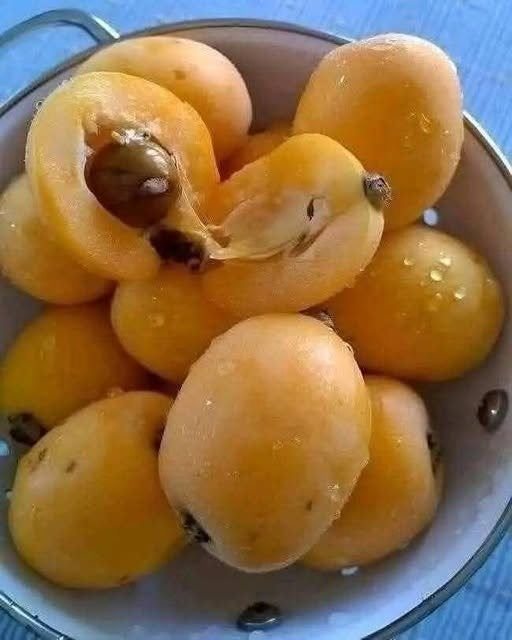
Common medlar is an old, once-popular fruit tree with a very unique way of ripening and eating.
🌳 Common Medlar
- Scientific name: Mespilus germanica
- Family: Rosaceae (rose family)
- Origin: Southwest Asia & southeastern Europe
- Grown since ancient Roman and medieval times
🍎 What Is a Medlar Fruit?
- Small, brown, apple-like fruit with an open calyx at the bottom
- Looks hard and unappetizing when picked
- Not edible when fresh off the tree
🍂 Bletting (The Key to Eating Medlars)
Medlars must undergo bletting:
- Stored in a cool place for several weeks after harvest
- Flesh softens, darkens, and becomes sweet
- Texture becomes soft and paste-like
- Flavor is often described as:
- Apple butter
- Dates
- Spiced applesauce
- Fig-like sweetness
👉 Once bletted, the fruit is eaten by scooping out the pulp.
🍽️ Culinary Uses
- Eaten plain (traditionally with a spoon)
- Medlar jelly or jam
- Medlar cheese (fruit paste)
- Wine, liqueur, or brandy
- Baked into tarts or puddings
🌿 Tree Characteristics
- Small, spreading tree (10–20 ft)
- Hardy and disease-resistant
- Beautiful white flowers in spring
- Attractive fall foliage
- Good for home gardens and heritage orchards
🥗 Nutrition
- High in fiber
- Contains vitamin C
- Rich in tannins when unbletted (why it’s inedible at first)
🕰️ Historical Notes
- Very popular in medieval Europe
- Mentioned by Shakespeare
- Fell out of favor due to:
- Unusual ripening process
- Softer texture not suited to modern transport
🆚 Medlar vs Loquat
- Medlar: Needs bletting, eaten soft, fall harvest
- Loquat: Eaten fresh, juicy, spring harvest
- Despite similar names, they are different fruits
If you want, I can help with:
- How to blet medlars at home
- Medlar jelly or jam recipe
- Growing and pruning a medlar tree
- Comparison with quince or persimmon
Just tell me 🌳
